Why AI Categories Matter More Than Keywords
AI doesn't work like a search engine. There are no keyword rankings to track, no bids to place, no position 1 through 10. When someone asks ChatGPT for a recommendation, the model generates a unique response every time. The same question asked twice can produce different brands, different reasoning, and different citations. The responses are dynamic, contextual, and never exactly the same.
That makes traditional keyword thinking nearly useless for AI visibility. What matters instead is category authority. AI models group brands by category and make recommendations based on how well they understand your fit within that category. If a model has strong, consistent information about your brand in a given space, you show up. If it doesn't, your competitors do.
Categories Are the New Keywords
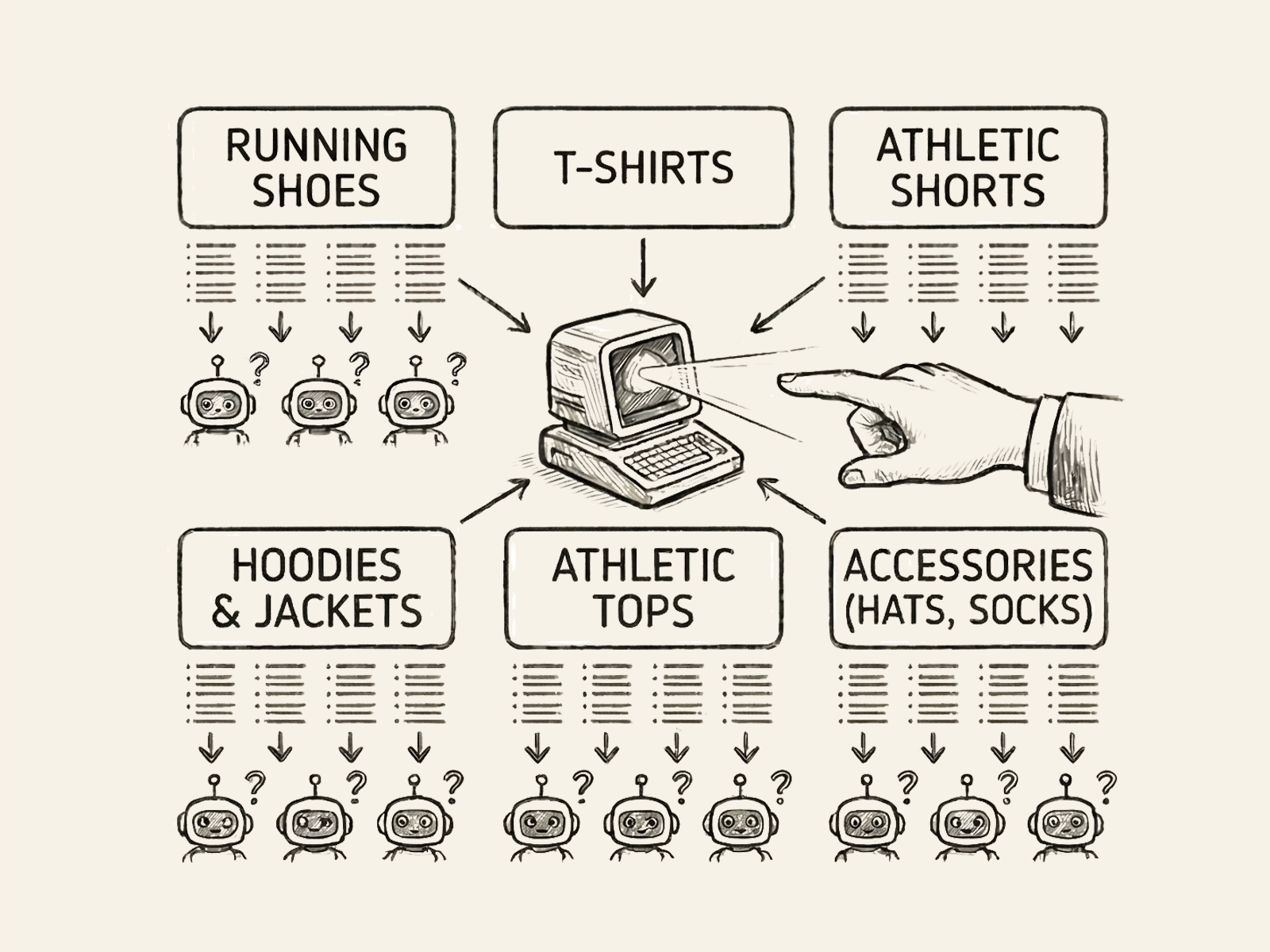
Think of categories as the containers AI uses to organize its understanding of the world. An apparel brand doesn't just compete in "workout gear." It competes in "athleisure," "shoes," "trail running," or "fashion trends." Each of those is a separate category in the AI's mind, with its own set of brands that get recommended. If your brand isn't associated with the right categories, you're not in the conversation at all.
That's why Centium builds dashboards at the category level. Instead of tracking individual keywords, we track how often your brand is recommended across the categories that matter to your business. Each category maps to a set of real prompts that consumers actually ask, and we measure your visibility across all of them.
Start With the Right Framework
The Segment Builder gives you that starting point. It scans your website, identifies your top offerings, and recommends the categories you should be tracking. It also generates sample prompts so you can see what AI visibility measurement looks like in practice. This is the same framework Centium subscribers use as the foundation of their dashboards, but with the full platform you get results across 600 prompts, five AI models, competitive benchmarking, and trend data over time.